

01Orchestration
controls
Acts and optimises. Detects a looming peak load and dispatches battery storage, charging infrastructure or consumers against it.
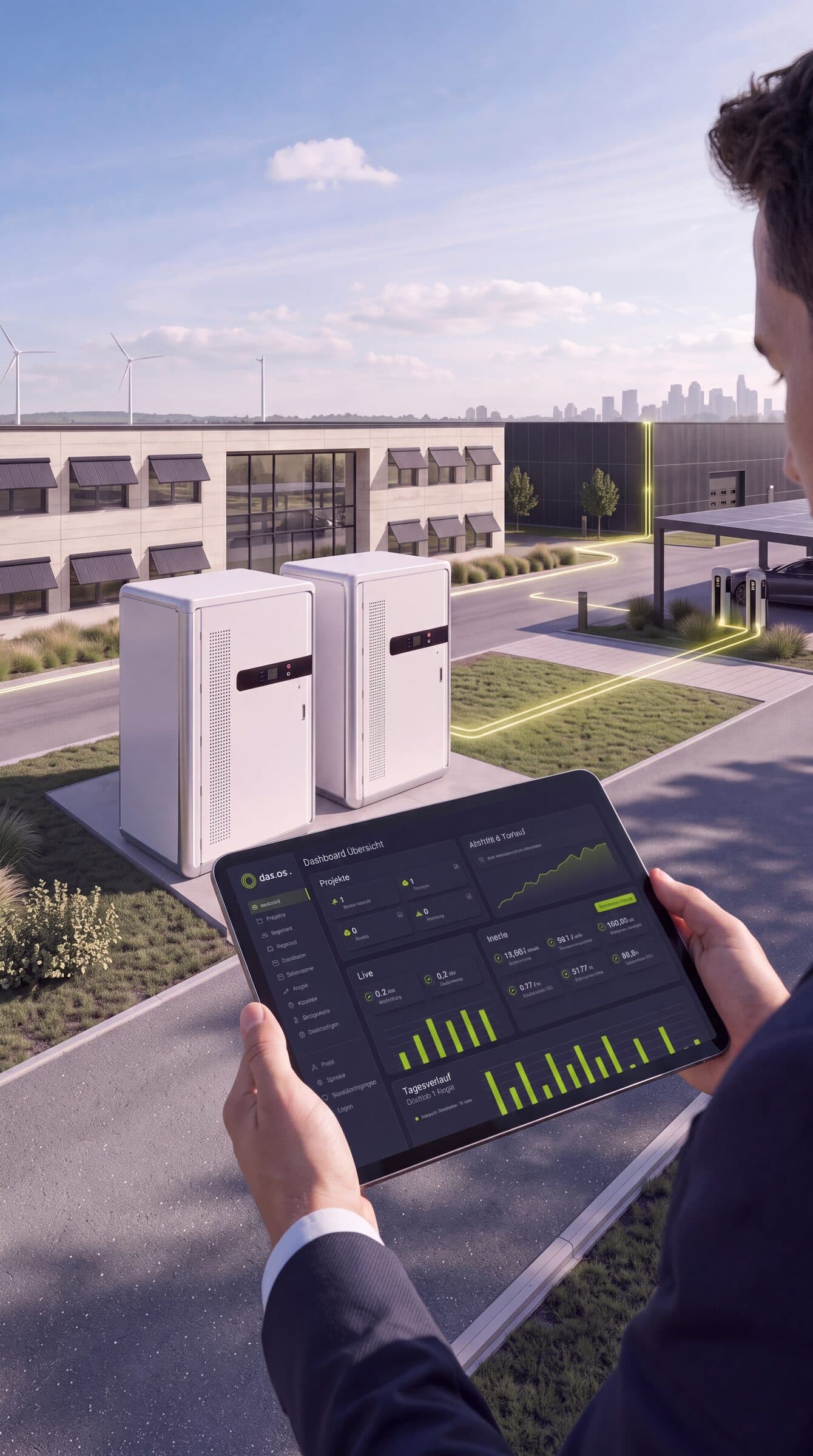
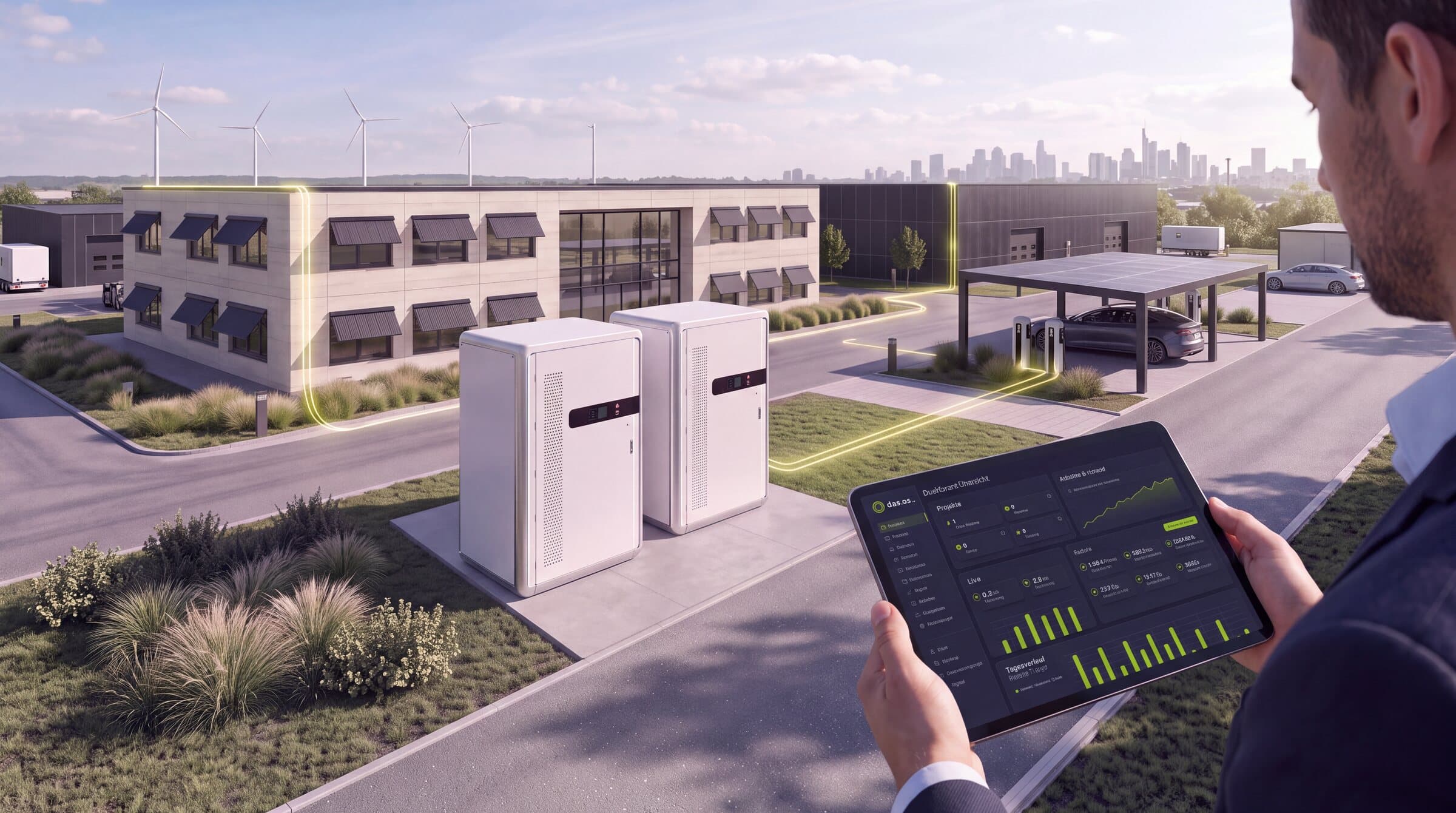
das.os connects generation, storage, consumers and billing into one system. Six modules control, display, evaluate and bill every energy flow in the building.
Each layer of das.os has exactly one task. Together they form a closed loop: act, see, evaluate, bill.
Acts and optimises. Detects a looming peak load and dispatches battery storage, charging infrastructure or consumers against it.
Shows what is happening: current load, grid supply, storage output, peak values and status messages like “Peak shaving active”.
Evaluates in retrospect: avoided peaks, reduced peak load in kW and the resulting savings in euros.
Settles the accounts: tariffs, meter readings, electricity costs and – where needed – cost centres and tenant electricity.
Peak shaving is the best way to see how the layers interlock. The same peak load passes through all four – from control to invoice.
Orchestration
This is where peak shaving actually happens: das.os detects a looming peak load and dispatches battery storage, charging infrastructure or consumers against it.
Monitoring
Current load, grid supply, storage output and peak values in real time – including the status message “Peak shaving active”.
Analytics
How many peaks were avoided? How many kW of peak load were reduced? How many euros were saved? Analytics answers this in retrospect.
Billing
Tariffs, meter readings and electricity costs flow into the billing – separated by cost centre or as tenant electricity if required.
das.os is modular. Each module covers its own area – from controlling the energy flows to connecting individual devices.
The acting layer. Orchestration recognises situations in the energy system and intervenes before they cost money.
Peak shaving, self-consumption optimisation, storage control, PV surplus, charging optimisation and dynamic grid supply are all functions of Orchestration.
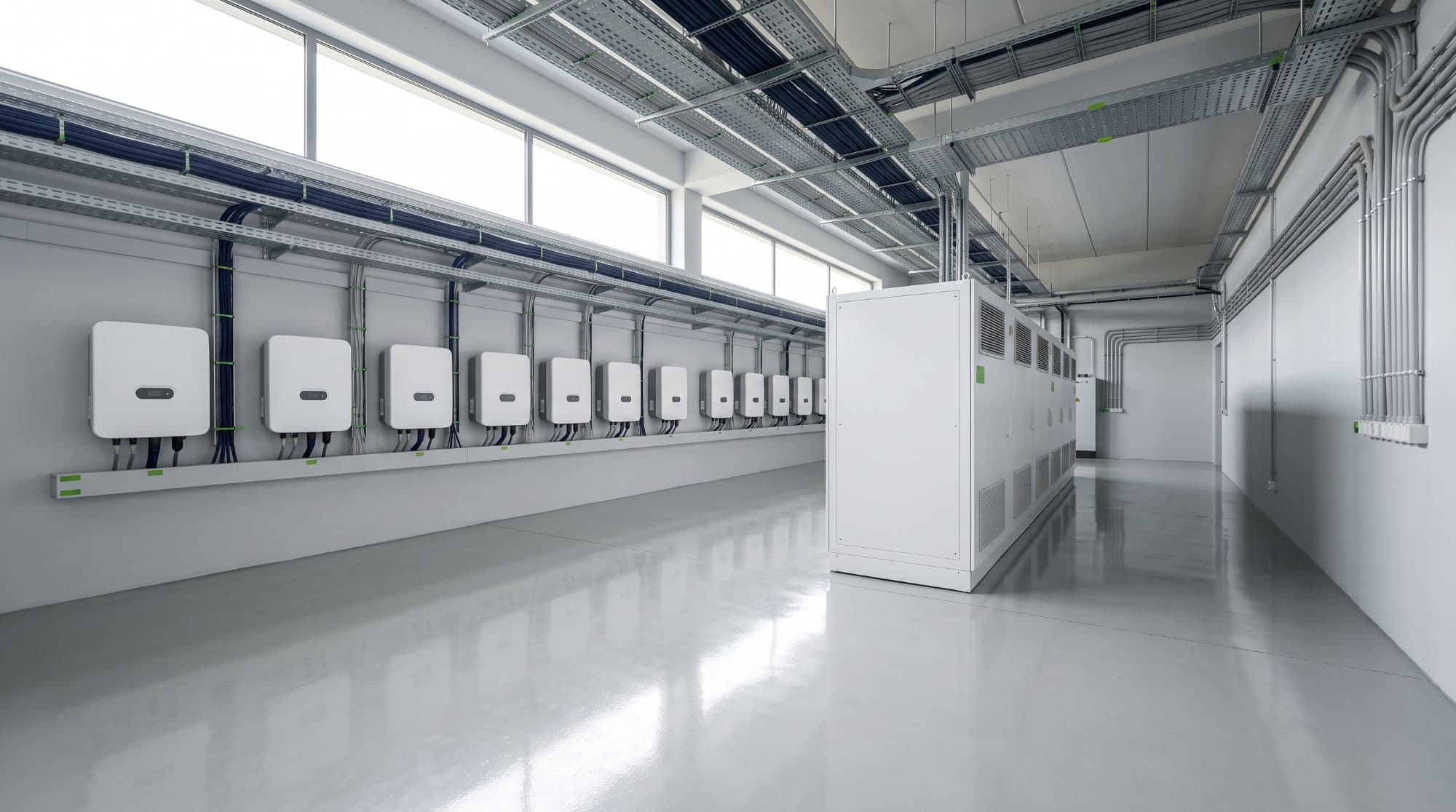 das.os.orchestration
acts
and optimises
A looming peak load is detected and intercepted with storage, charging infrastructure or consumers.
Self-generated energy is used where it has the highest value in the building.
Charging and discharging the battery follow the situation in the grid and in the building.
Surplus solar power is used deliberately instead of flowing into the grid uncontrolled.
Charging sessions are distributed so they don't push the peak load any higher.
Supply from the grid follows tariff and situation – not chance.
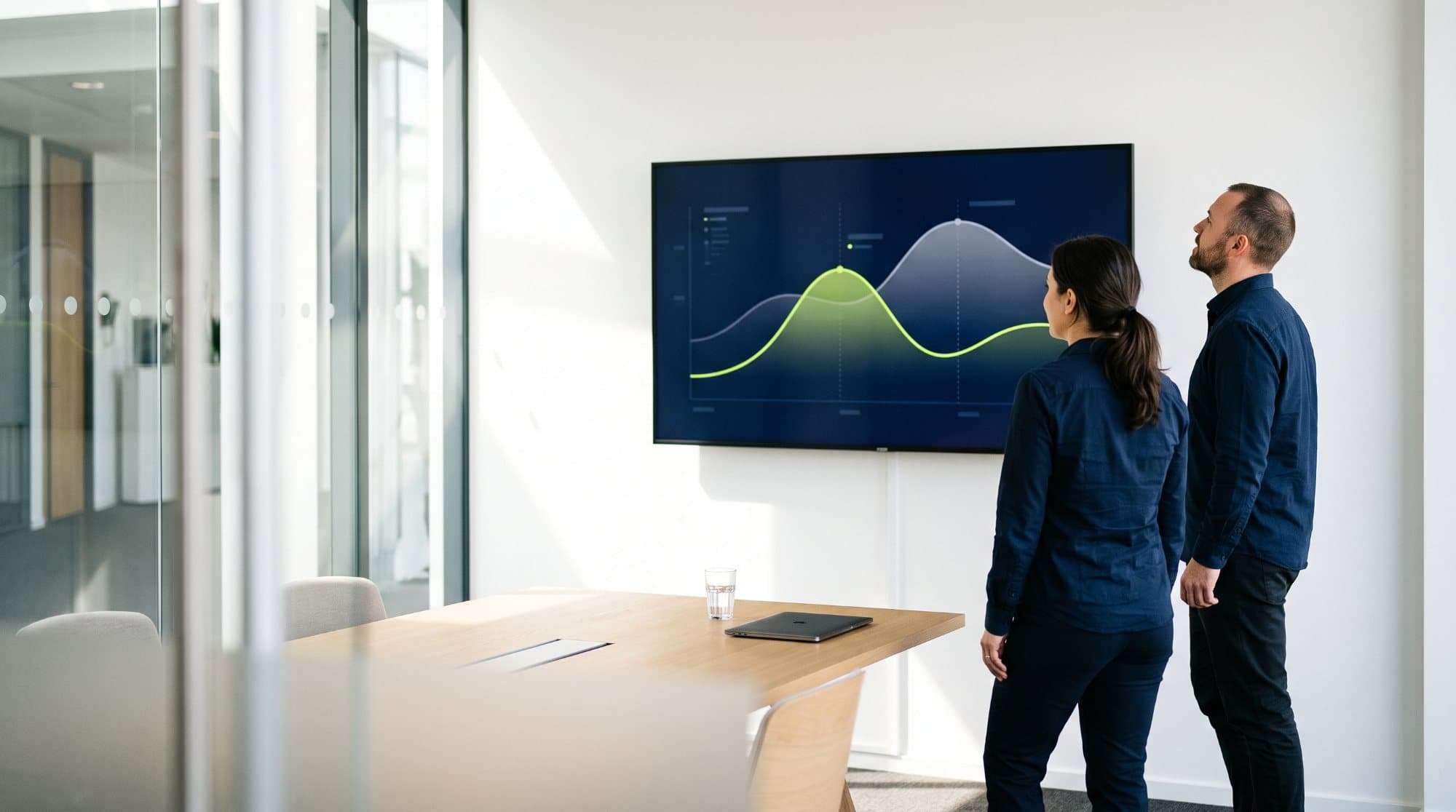 das.os.analytics
evaluates
in retrospect
What Orchestration does in operation, Analytics makes traceable in retrospect – for every billing period.
Every intercepted peak load is counted and attributed to the intervention that prevented it.
The difference between uncontrolled and controlled peak load is reported in kilowatts.
Reduced peak load and the stored tariff produce the amount that is missing from the bill.
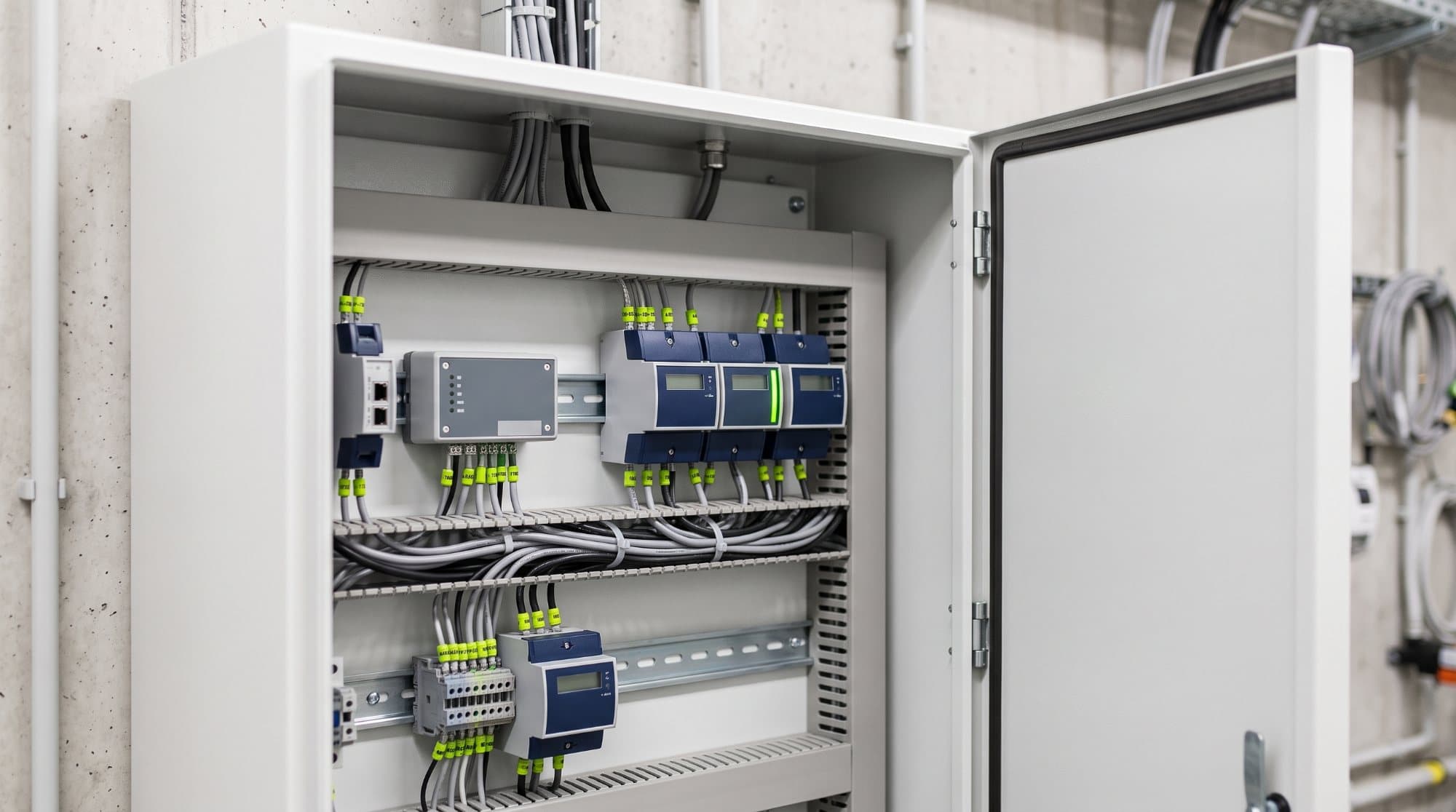
das.os.connect connects meters, plants and third-party systems. Only this connection makes Monitoring, Analytics and Billing possible.
 das.os.connect
Connection of existing plants and third-party systems in the building.
Meter readings as the basis for monitoring, analytics and billing.
Storage, inverters, charging points and consumers become addressable.
Open programming interfaces for data exchange in both directions.
Tell us about your building and existing systems – you'll receive an assessment of which modules make sense and what they can control.
The Energy Operating System by das.kraftwerk. It consists of six modules: Orchestration, Monitoring, Analytics, Billing, Care and Connect. Together they control, monitor, evaluate and bill all energy flows of a building.
Orchestration acts and optimises – this is where peak shaving actually happens, by controlling storage, charging infrastructure or consumers. Monitoring shows what is happening: current load, grid supply, storage output, peak values and messages like “Peak shaving active”.
In Orchestration. das.os detects a looming peak load and steers against it. Monitoring shows the process in real time, Analytics evaluates it in retrospect, Billing brings the result into the invoice.
Peak shaving, self-consumption optimisation, storage control, PV surplus, charging optimisation and dynamic grid supply.
Analytics answers three questions in retrospect: How many peaks were avoided? How many kW of peak load were reduced? How many euros were saved? Plus performance data, forecasts and KPIs.
Yes. das.os.billing settles tariffs, meter readings and electricity costs – separated by cost centre or as tenant electricity if required.
Via das.os.connect: interfaces to existing plants, smart meters, connected devices and open APIs.

Personal consultation
We show you das.os on your building.