

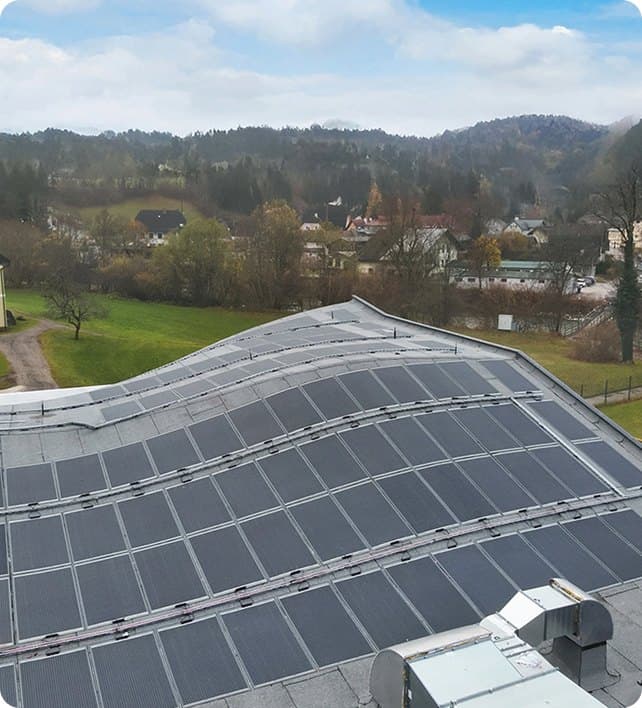
An energy system on a building is not a product but a chain of decisions: structural design, envelope, electrical engineering, grid connection, operation. Every interface in this chain is a potential breaking point – technically and contractually. We built the company so that these interfaces sit in-house.
Three trades, one responsibility
In the traditional setup, three companies plan and build on the same building envelope: the facade builder handles the structure, the electrical contractor the distribution, the PV installer the modules. Each of these companies works cleanly – within its own scope of services. What lies between those scopes belongs to no one.
That is exactly where the problems arise that you later pay for on site: penetrations that are not coordinated. Load assumptions based on an outdated plan revision. A grid connection point not yet approved at the time of installation. And, in the event of damage, three warranties pointing at each other.
The most expensive mistakes in an energy project are rarely technical mistakes. They are handover mistakes.
What 103 years actually means
The number is the sum of our core team's professional years across the three disciplines – not the age of a company. It describes something practical: every project meeting includes someone who has personally done the other side's work. The facade specialist knows how much tolerance the substructure really allows for module mounting. The electrical engineer knows the grid operator's requirements before the modules are ordered.
This experience does not replace planning. It ensures the right questions are asked early – while changes are still lines on a drawing, not change orders.
What integration actually changes
- One point of contact across planning, manufacturing, installation and commissioning – no handover losses between trades
- Load assumptions, mounting and module format are defined together, not one after the other
- Grid connection and system registration run in parallel with manufacturing instead of afterwards
- One warranty covering structure, module and electrical engineering
- Custom formats are a planning decision, not a procurement issue
Why this matters most for existing buildings
In new builds, much can be sorted out later. In existing buildings, it cannot. There, the structural capacity is fixed, the envelope is fixed, and the substructure's reserve is often the limiting factor for the entire project. Thinking structure and module together makes it possible to shift weight to where reserve exists – instead of letting the project fail over a standard module.
That is why we do not outsource manufacturing, electrical engineering or structural work. Not on principle, but because the interface cannot be resolved any other way.