

In energy terms, a bath is a special case. The base load runs around the clock, the peaks follow visitor numbers, and the largest consumers – circulation, ventilation, hot water – can only be shifted to a limited extent. That is exactly why a bath is a good candidate for an integrated energy concept.
The load profile was the real task
Before the first row of modules came the measurement. Over a full annual cycle we analysed quarter-hour values: circulation pumps, ventilation, hot-water preparation, lighting, catering. The result was an unusually high, very constant base load with pronounced morning and evening peaks and a clear seasonal offset between demand and yield.
Pure yield optimisation would have led to the wrong result here. What mattered was not how many kilowatt hours the system produces, but what share of them is consumed directly in the building – and how far the power peaks can be capped.
For a bath, it is not the largest system that pays off, but the one whose generation matches consumption.
Design guided by consumption
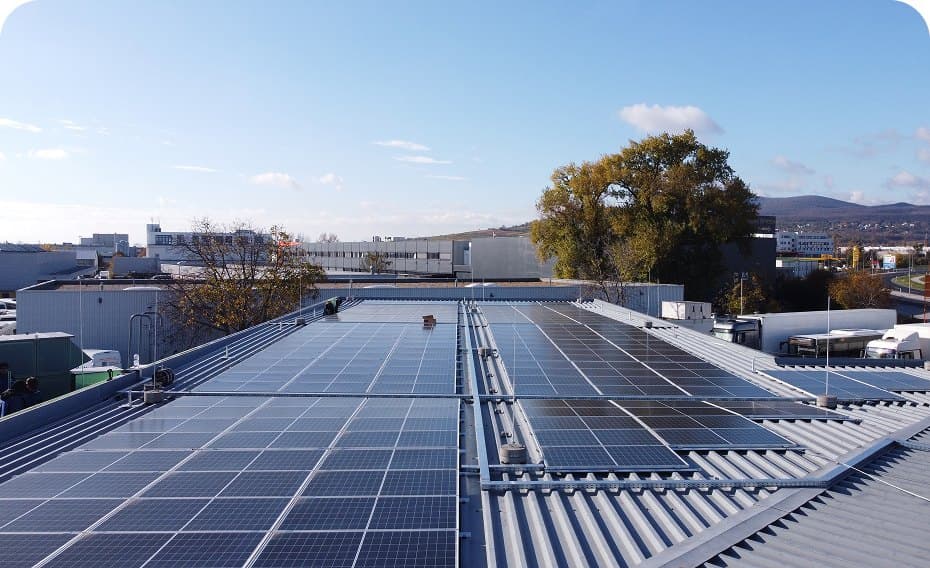
The roof layout therefore does not follow maximum south orientation but a deliberate east-west distribution. This slightly lowers the annual yield per kilowatt peak, yet broadens the generation curve across the day – and thus matches the morning and evening peaks of bath operations far better.
The storage system was not sized for self-sufficiency but as a buffer for intraday shifting and as a tool for peak shaving. A substantial part of its value lies in the reduced grid connection capacity, not just in the shifted kilowatt hours.
The building blocks of the system
- Rooftop photovoltaics in an east-west layout, matched to the load reserve of the existing structure
- Battery storage for intraday shifting and capping of power peaks
- Load management prioritising circulation, ventilation and hot-water preparation
- Metering concept with sub-metering of major consumers as the basis for ongoing operation
- Monitoring with alerts on deviation from the expected yield profile
Load management instead of shutdowns
The load management does not switch consumers off; it shifts them within their technically permissible windows. Hot-water preparation is brought forward when surplus is available. Circulation runs in stages guided by yield, as long as hygiene requirements are met. Operations notice none of this – and that is precisely the requirement for a public bath.
What remains in operation
The real work begins after commissioning. An energy concept that is not kept up to date loses a relevant share of its value within a few years – because operating hours change, consumers are added and setpoints get adjusted. Monitoring is therefore not an add-on but part of the concept.